Performance Today Requires More Than Metrics, It Requires Meaning
In 2026, organizations that rely on spreadsheets and financials alone will struggle to remain competitive. Today’s volatile markets, remote work realities, and customer expectations demand performance systems that do more than track numbers; they must connect strategy to execution.That’s where the Balanced Scorecard (BSC) comes in. Beyond academics, it is a practical performance management system used by leading organizations around the world to interpret performance with clarity, context, and direction. But what exactly makes it indispensable?
What Is the Balanced Scorecard (And Why It Matters Now)
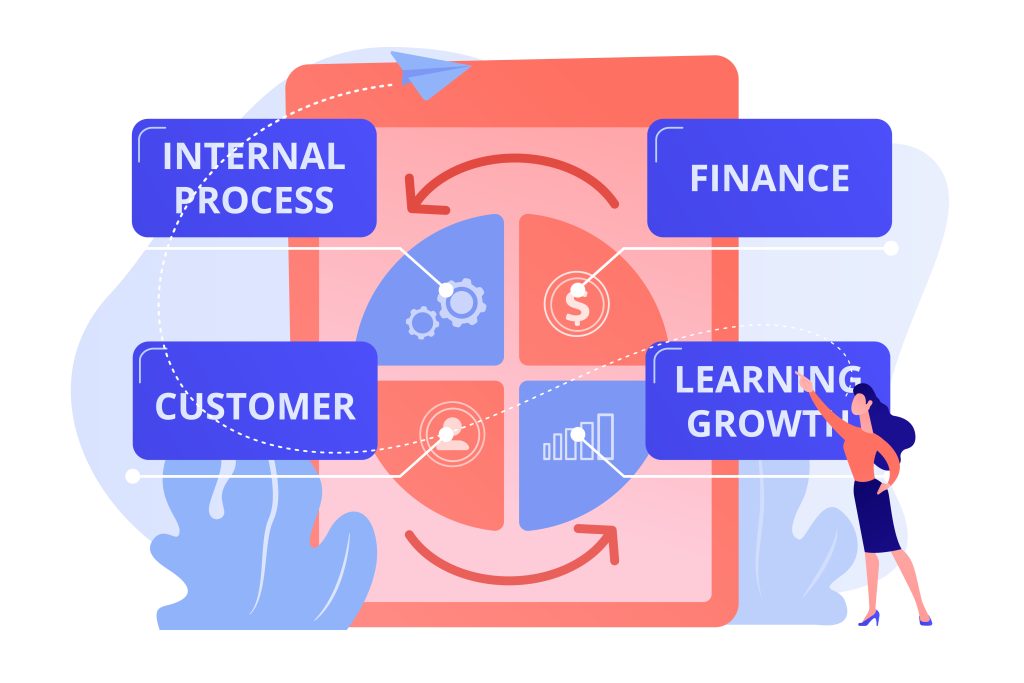
If you picture target-setting and performance management as a dashboard, then the traditional model is a single gauge, usually financial. The Balanced Scorecard flips the view into a multi‑lens dashboard that measures the following pillars:
- Financial
- Customer
- Internal Process
- Learning & Growth
According to industry practitioners, organizations using Balanced Scorecard are more strategic, more aligned, and better positioned for sustained growth than those that rely on siloed KPIs alone. (Investopedia)
Why Financials Alone Are No Longer Enough
Financial KPIs tell you what happened, not why it happened. When markets shift, when customers change expectations, or when talent churn spikes, leaders need early signals to pivot effectively.
For example:
- A drop in internal process efficiency may foretell rising costs.
- A decline in customer satisfaction often precedes revenue loss.
- Learning & growth indicators reveal capabilities gaps before they become crises.
The Balanced Scorecard gives leaders predictive power, not just reporting power.
How BSC Improves Decision‑Making
When balanced scorecards are implemented well, they:
- Connect performance data to strategic goals
- Reveal cross‑functional dependencies
- Identify performance roadblocks early
- Encourage solutions, not just reports
Leaders gain a panoramic view of performance, rather than fragmented snapshots.
What This Means for 2026 and Beyond
Companies that adopt the Balanced Scorecard today will be positioned to:
- Improve strategic alignment — individual/departmental goals linked to corporate outcomes
- Accelerate performance improvement — early detection, faster action
- Build organizational resilience — learning and adaptation baked in
In a landscape where speed and adaptability determine success, BSC becomes not just a performance tool but a strategic advantage.
You Don’t Have to Navigate This Change Alone
Implementing the Balanced Scorecard is not simply ticking a checklist. It’s about clarifying strategy, translating vision into measurable outcomes, and embedding performance thinking across teams. That’s where expert support matters.
At CREM Consulting, we help organizations build Balanced Scorecard systems that actually work — not just dashboards that look good.
👉 Interested in strengthening your performance strategy in 2026? Let’s talk.